Polo Shirt Production & Manufacturing Capabilities
A complete view of how a polo shirt moves through the factory — from knit fabric arriving at the cutting room to sealed export cartons — with the equipment, checks and handoffs at each stage.
The Eight Stages
Production Flow on the Floor
Each stage has an owner, a quality gate and a handoff record.
1. Fabric Incoming
Composition, GSM, width, shade separation and defect inspection before acceptance.
2. Relaxing & Spreading
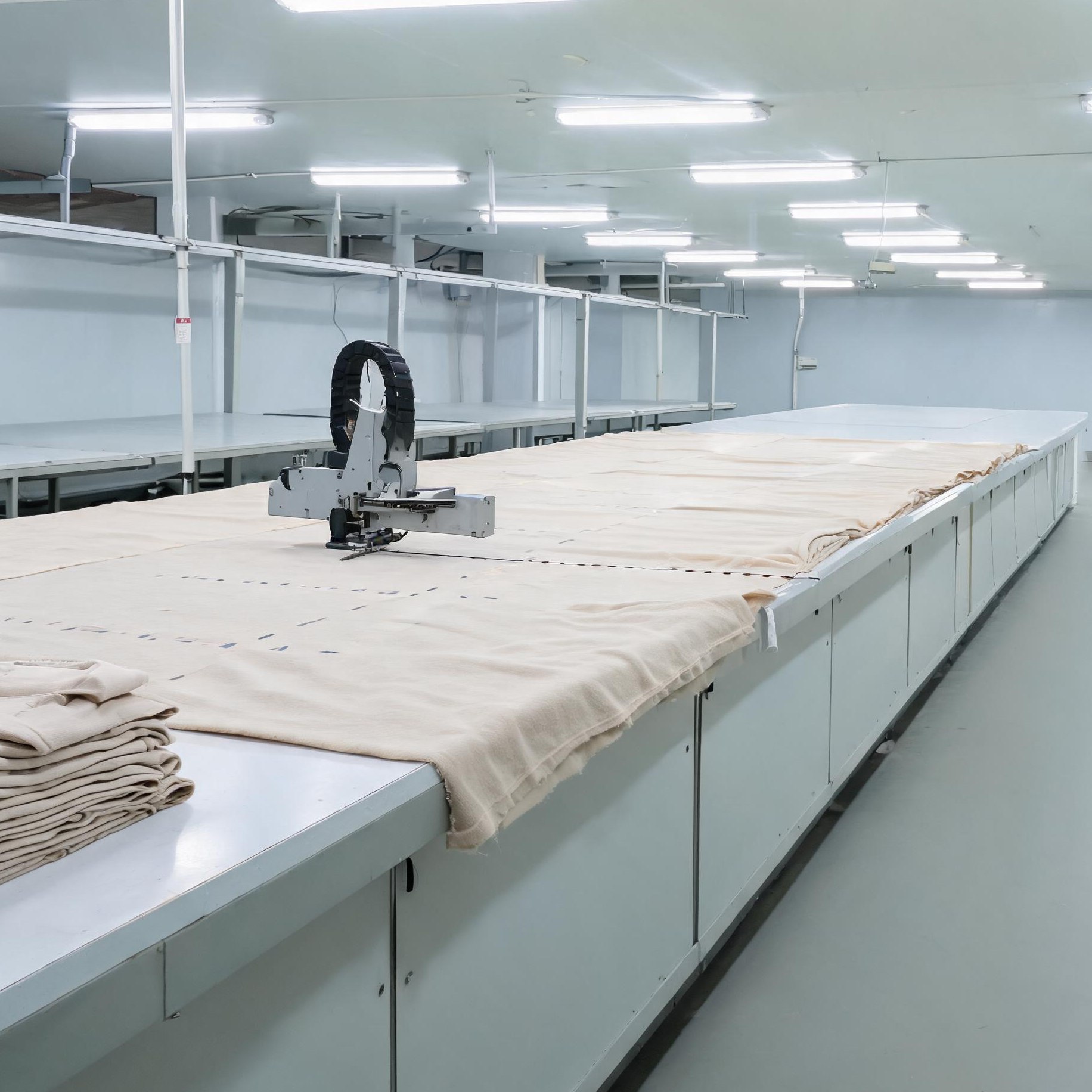
Fabric relaxation to control shrinkage, then layered spreading on the cutting table.
3. Cutting
Markers cut by machine or hand; panels bundled by size, color and shade.
4. Decoration
Embroidery, printing or patches applied to panels before assembly.
5. Sewing
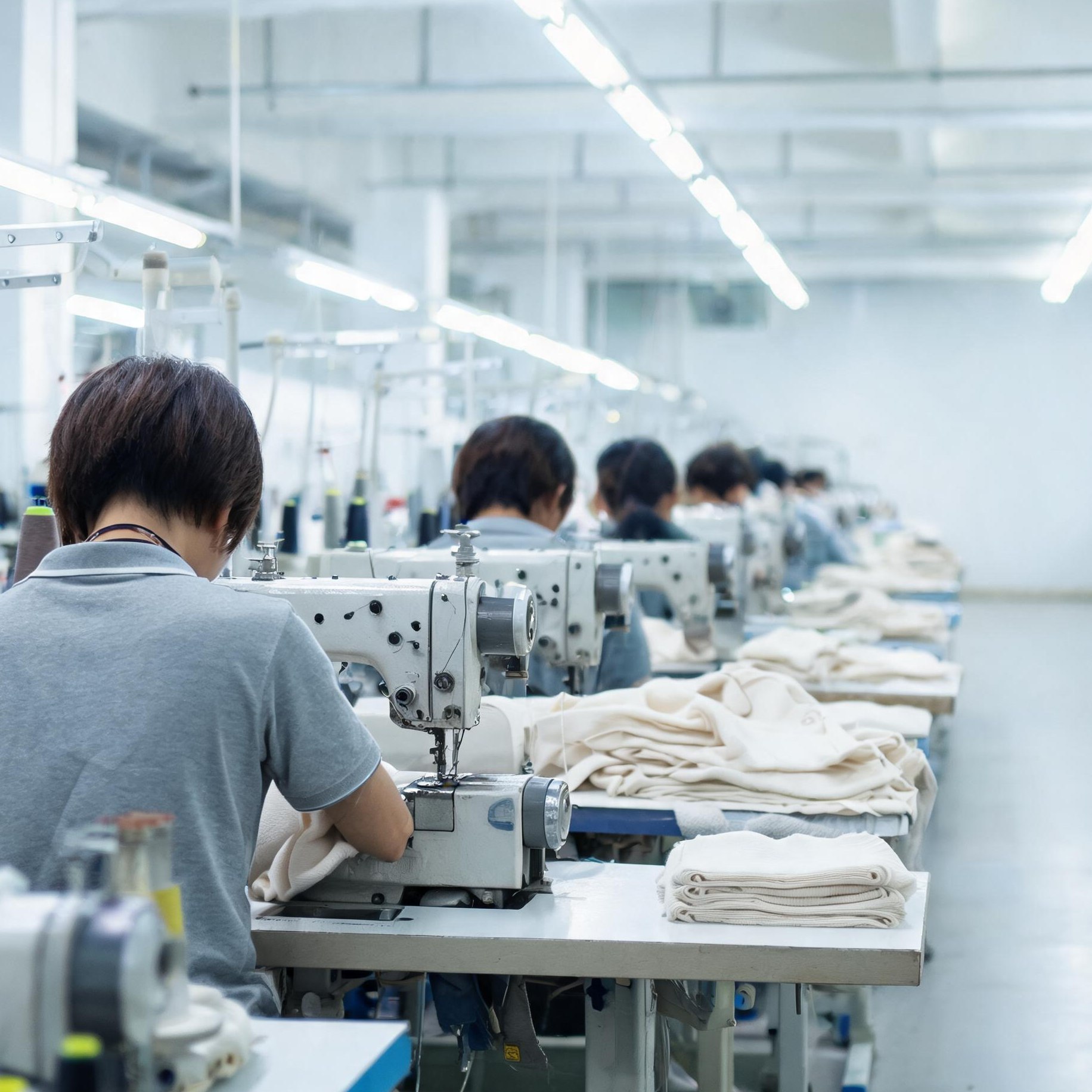
Collar, placket, shoulders, sleeves, hem and side seams on line operations.
6. Trimming & Pressing
Thread trimming, stain check, pressing and initial measurement audit.
7. Final Inspection
Random AQL inspection on workmanship, measurements and packing compliance.
8. Packing & Loading
Fold or hanger, polybag, tags, carton counts, sealing and container loading.
Stage Detail 1–4
Fabric, Cutting and Decoration
Knit fabric is the first risk point: shade variation, GSM drift and hidden defects become garments quickly. Incoming lots are measured and shade-separated before spreading, and bundles carry shade marks through sewing so pieces from the same shade stay together.
- Lab dips approved before bulk dyeing; bulk fabric checked against the approved dip
- Markers optimized for knit grain and, on striped styles, pattern matching
- Embroidery digitized and test-stitched on production fabric for pull and puckering
- Printed panels flash-cured and adhesion/rub tests conducted before assembly
Stage Detail 5–8
Sewing, Finishing and Packing
Polo sewing is collar- and placket-led: these operations run first because they set the shirt’s front alignment. Lines are balanced so work-in-progress does not accumulate, and inline checkers catch workmanship issues at the operation that creates them.
- Collar attachment and placket topstitching checked against the PP sample
- Sleeve setting, side seams and hemming with seam-allowance and SPI checks
- Finished garments trimmed, pressed and measured against the approved spec
- Random AQL final inspection; passed goods folded, tagged and carton-sealed
Equipment and Capacity
Production Resources
Verified equipment list and monthly capacity are provided in the buyer pack.
Sewing lines
Flatbed and overlock operations with dedicated collar/placket stations. Current configuration: 20+ partner factories running 4-8 sewing lines each, set up according to style and volume.
Decoration
Multi-head embroidery machines, screen printing stations and heat-press capacity for transfer work.
Finishing
Trimming, vacuum pressing, needle detection, folding and carton sealing stations before loading.
FAQ
Frequently Asked Questions
Straight answers to what apparel buyers ask before requesting a quotation.
Do you knit your own fabric or buy it from mills?
Can production handle striped and tipped designs?
How is capacity confirmed for a large order?
Can we send our own QC team during production?
Have a production volume to validate?
Share style and quantity — we will confirm line availability, production calendar and shipping window for your delivery date.